
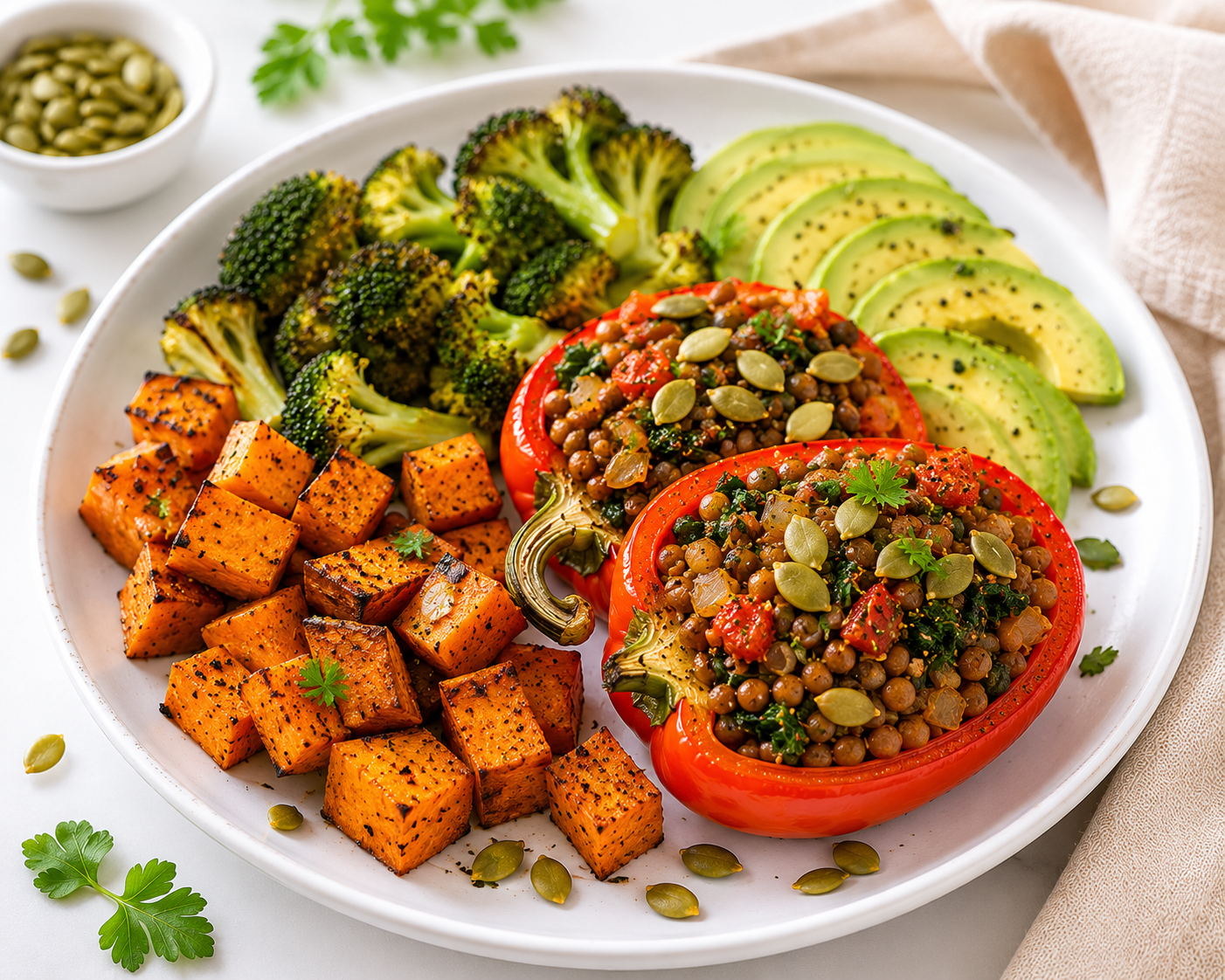
Lentil stuffed peppers served with roasted sweet potatoes, broccoli, avocado slices, and a sprinkle of pumpkin seeds.
One of the biggest questions I hear when people start eating more plant-based foods is, "How do you stay full?"
And my honest answer is usually: it's not just about protein. It's about how balanced your meals are overall.
In the beginning of my journey, I paid a lot of attention to protein because I wanted meals that would keep me full. While protein certainly helped, I eventually realized it was only one piece of the puzzle. Over time, I learned the importance of including a variety of foods to create more balanced meals and support my overall nutrition.
Here’s what most people don’t realize: staying full when eating more plant-based foods isn’t about eating more food. It’s about eating the right combination of nutrients that work together.
Why You May Feel Hungry More Often
When people start eating more plant-based foods, it's common to assume that feeling hungry more often means they're not eating enough or not getting enough protein.
But in most cases, it comes down to how your meals are built.
Many plant-based foods are naturally high in fiber and water, which can help support digestion and overall health. However, meals that are very low in protein or healthy fats may not feel as satisfying and can leave you hungry again sooner.
Another common mistake is relying too heavily on one category of foods, like carbs or lighter meals. Smoothies, salads, and grain bowls can be nutrient-dense, but without enough balance, they may not keep you full for long.
The goal isn’t to eat more food, it’s to build balanced meals that have the right combination of nutrients to support energy and satiety.
Protein plays an important role in satiety, but it isn't the only piece of the puzzle.
How Much Protein You Actually Need
One of the most common questions people have about eating more plant-based foods is whether they're getting enough protein. In reality, most people don't need as much protein as they think. A general guideline for healthy adults is about 0.8 grams of protein per kilogram of body weight each day, though individual needs can vary. If you're more active, there may be potential benefits if your protein intake is higher, but it's still very achievable to meet your needs with a variety of plant-based protein sources.
Foods like lentils, chickpeas, tofu, tempeh, quinoa, and beans are all excellent sources of plant-based protein that can easily be incorporated into your meals.
For many people, the challenge isn't necessarily getting enough protein. It's building meals that include a balance of protein, carbohydrates, and healthy fats. Choosing fiber-rich foods can help make those meals even more satisfying. While protein is important, it’s only one part of what makes a meal satisfying.
The Real Key to Fullness: Balanced Meals
If you've ever felt hungry shortly after eating plant-based, it isn't because plants aren't filling. It's usually because your meal is missing one or more important components.
A satisfying meal often includes:
1. Protein
Helps support satiety and plays an important role in maintaining muscle and overall health.
2. Carbohydrates
Provide energy and fuel your body throughout the day. Choosing fiber-rich carbohydrates like fruits, vegetables, legumes, and whole grains can help support fullness.
3. Healthy Fats
Help support satisfaction and the absorption of certain nutrients.
Fiber also plays an important role. Many plant-based foods naturally contain fiber, which can help slow digestion and contribute to a feeling of fullness.
The magic happens when these nutrients work together.
Example of a balanced meal:
Lentil stuffed peppers served with roasted sweet potatoes, broccoli, avocado slices, and a sprinkle of pumpkin seeds. This combination provides protein, fiber-rich carbohydrates, and healthy fats that work together to create a more satisfying meal.
That's how you build a meal that keeps you full, not just temporarily satisfied.
What About Juice?
Juice can be a great way to add fruits and vegetables to your routine, but it shouldn't replace balanced meals. Since juicing removes most of the fiber, it may not keep you full on its own.
Use juice to complement a balanced diet:
• Enjoy it with breakfast, lunch, or dinner
• Pair it with foods that contain protein, healthy fats, or fiber
• Think of it as an addition to your meals, not a replacement for them
This can help support fullness while still allowing you to enjoy the benefits of juicing.
Final Thoughts
Learning how to stay full on a plant-based diet isn’t about eating more. It’s about building meals that are balanced, satisfying, and supportive of your overall nutrition.
While protein plays an important role, it’s only one piece of the puzzle. Including a variety of plant-based protein sources, fiber-rich carbohydrates, and healthy fats can help create meals that keep you feeling satisfied and energized throughout the day.
Hydration can support satiety, and gut health may also play a role over time, but the foundation always comes back to balanced meals. When these nutrients work together, eating more plant-based can feel more sustainable and enjoyable.
If you’re just getting started, don’t worry about building the “perfect” meal. Focus on including a source of protein, fiber-rich carbohydrates, and healthy fats whenever possible. Over time, you'll learn what combinations work best for your body and keep you feeling satisfied.
Remember, staying full on a plant-based diet isn’t about perfection. It’s about finding a balance that works for you and choosing foods you genuinely enjoy.
Keep Learning
If you’re working on building a sustainable plant-based lifestyle, these articles can help:
How to Eat More Plant-Based Foods (Without Feeling Overwhelmed)
Free Download
Protein Cheat Sheet
Learn where to get protein from plants, discover simple pairing ideas, and explore practical ways to build more satisfying meals.