
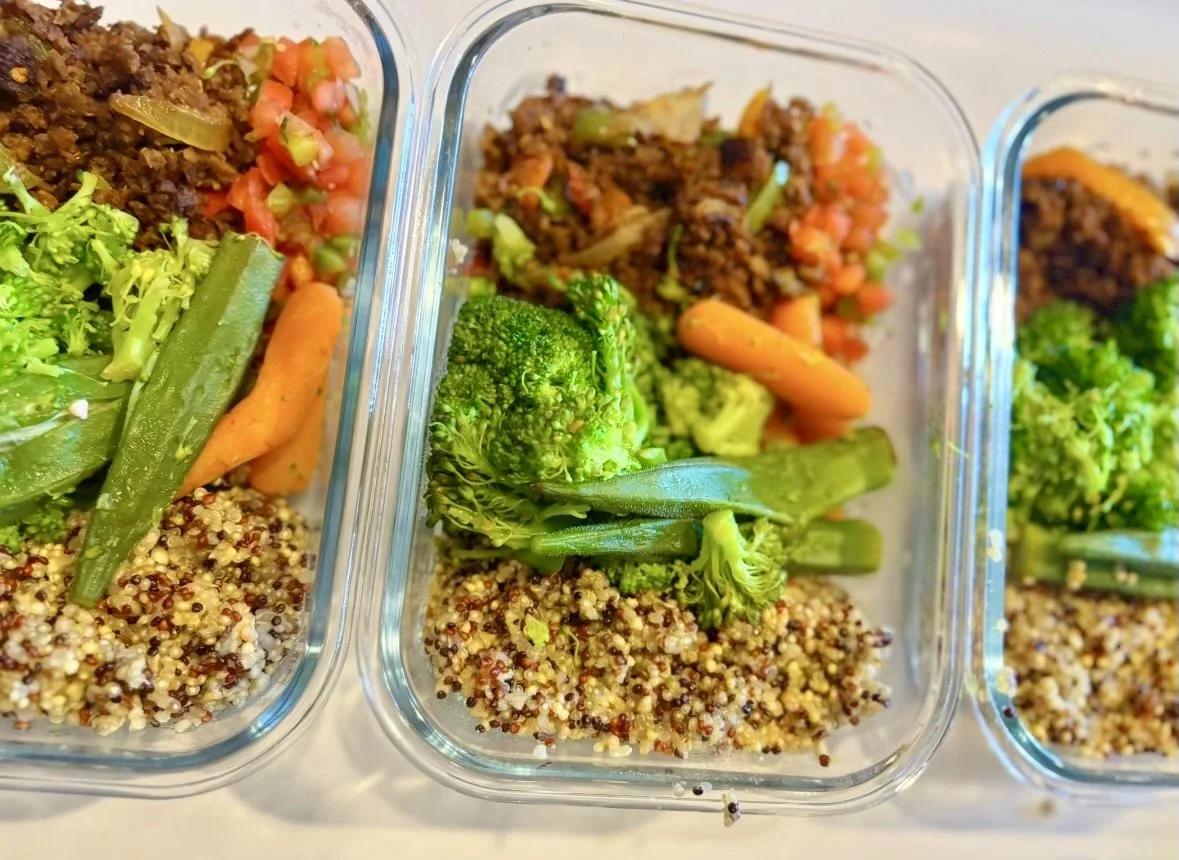
What do you eat when you’re trying to eat less meat? I remember asking myself this same question when I first started eating more plant-based foods. Honestly, I didn’t always feel satisfied in the beginning. It took a lot of trial and error before I learned how to create meals that kept me full, energized, and happy. Over time, I discovered that balance wasn’t about giving things up. It was about finding new foods to enjoy and learning how to create meals that truly nourished me. When we talk about “balance,” it doesn’t mean counting every calorie or stressing over every bite. Balance means making sure your meals include a mix of protein, carbohydrates, and healthy fats.
It’s all about variety, planning, and learning a few easy swaps that make meals both nourishing and delicious.
Eat more plant-based (without feeling overwhelmed)
Eating more plant-based doesn’t have to be complicated. You don’t need expensive ingredients, complicated recipes, or a completely vegan kitchen overnight. Start by building simple meals with protein, carbohydrates, vegetables, and healthy fats.
1. Choose a Plant Protein
Legumes
• Beans
• Lentils
• Chickpeas
Soy-Based Options
• Tofu
• Tempeh
• Edamame
• Soy chunks (Textured Vegetable Protein)
Other Plant Proteins
• Seitan
• Nuts & seeds
Not every plant-based meal needs to revolve around tofu. Beans, lentils, chickpeas, soy foods, and other plant proteins can all help create balanced and satisfying meals.
2. Add a Grain or Carb
• Brown rice
• Quinoa
• Sweet potatoes
• Oats
• Whole grain pasta
• Couscous
3. Load Up on Vegetables
• Spinach
• Broccoli
• Bell peppers
• Cucumbers
• Kale
• Zucchini
4. Finish with Healthy Fats
• Avocado
• Olive oil
• Tahini
• Nuts
• Chia seeds
Example of building a simple meal:
Quinoa + roasted chickpeas + sautéed spinach + avocado drizzle.
You Don’t Have to Fill Your Plate with Carb-Heavy Meals
One challenge I often hear from people trying to eat more plant-based is figuring out how to build a balanced meal. Sometimes when meat is removed, the plate ends up being mostly carbs like pasta, rice, bread, or potatoes.
Eating more plant-based isn’t just about removing meat from your plate. It’s about creating balanced meals that still nourish and satisfy you. Instead of focusing on one category of food, try combining ingredients from different groups: plant proteins, grains, vegetables, and healthy fats.
For example, if chickpeas are your main protein source, you may notice you need a larger portion on your plate compared to animal protein sources. Plant proteins are generally less protein-dense per serving than animal proteins. One cup of cooked chickpeas contains about 15 grams of protein, while a small serving of chicken breast can contain over 30 grams. Pairing chickpeas with whole grains, vegetables, and healthy fats can also help create a more balanced and satisfying meal.
If you’re following a fully plant-based diet, it's also helpful to be mindful of nutrients such as omega-3 fats. Foods like chia seeds, flaxseeds, walnuts, and algae-based supplements can help support those needs.
The goal isn’t perfection, it’s learning how to build meals that leave you feeling nourished and satisfied.
Focus on Adding, Not Restricting
One of the easiest ways to eat more plant-based is to focus on what you can add to your meals instead of obsessing over what to remove. Small changes can make plant-based eating feel more realistic, sustainable, and less overwhelming.
• Add beans to tacos or rice bowls
• Add spinach or mushrooms to pasta dishes
• Swap one meal a day for a plant-based option
• Replace dairy milk with oat, almond, or soy milk
• Try a Meatless Monday routine
• Snack on fruit, nuts, or hummus instead of highly processed snacks
• Add chia or flax seeds to smoothies or oatmeal
• Experiment with veggie-packed soups or stir-fries
You Don’t Have to Be Perfect
Whether you're simply looking to add more plant-based meals to your routine or just exploring new ways to eat more plants, you don't have to overcomplicate things.
Start simple:
• Start with one plant-based meal a day
• Keep familiar foods you already enjoy
• Convenience foods are okay
• Frozen vegetables still count
• Progress matters more than perfection
Eating more plant-based isn’t about strict rules, it’s about making simple choices that help you feel nourished.
Keep Learning:
How to Stay Full on a Plant-Based Diet (It’s Not Just About Protein)
FREE DOWNLOADS
10 Balanced Plant-Based Meals to Try
Need ideas for putting these tips into practice? Grab this free guide with 10 balanced plant-based meal ideas you can try at home.